
International Transgender Day of Remembrance
She stands outside the salon and hesitates.
The door is open, the lights are on, everything as it should be. And yet she doesn’t know whether she is welcome inside. She doesn’t know whether someone will look at her a moment too long, whether she’ll be asked her name in that tone that seems to pass judgment on her very right to exist.
So she stands still.
Maybe she goes in. Maybe she turns around and goes home.
This moment appears in no statistics. It never makes the news. It is simply there, every day, for trans people all over the country.
This small hesitation at the door. This constant calculation of where it is safe to be oneself.
We often speak of the backlash against trans rights as something large and distant. Laws passed in other countries, hardening rhetoric in public life, attempts to restrict access to healthcare.
All of this is true, and all of it is serious — but the backlash does not begin there.
It begins at the door of the salon.
Great changes do not spring from a vacuum. They grow from the soil of small indignities: the misgendering that no one apologizes for, the comments at work, the stares at the swimming pool, the questions about whether this isn’t all just a passing trend.
Each one seems minor. But they add up.
A trans person learns to stay perpetually on guard. To assess every space before stepping into it. To carry the same question wherever she goes:
Is it safe to exist here?
It is exhausting in a way that is hard to describe to anyone who has never had to ask.
When a society grows used to discussing the existence of an entire group as though it were merely a “matter of opinion,” people gradually become an ideology rather than flesh-and-blood human beings. And so we stop seeing the person in front of us.
The small indignities are the great backlash in small doses.
As a theologian, I believe that every person is created in the image of God.
Not some people.
All of them.
The heart of the message I have devoted myself to is simple: our neighbour has a right to be safe, and that right is greatest where they stand most vulnerable.
Standing with the marginalized is not a departure from Christian values. It is their very centre.
On the 20th of November, we remember the trans individuals who have lost their lives.
They did not die because of “political disputes.” Many of them were murdered. Others had lived with rejection, isolation and suffering that society must take responsibility for.
Their memory places a duty upon us. Not only to grieve from a distance, but to change how we meet one another at the door.
At work. In the shop. At the pool.
In all of society.
This year, Trans Allies want to fill this day with safe places.
There are many ways to do so: with words, with presence, with the simple act of wearing a symbol that tells others they are safe with you.
We will not undo the great backlash with a single statement.
We undo it by taking the small indignities seriously. Step by step. Until the person outside the salon no longer has to hesitate.
Until she can walk in without a second thought.
You are safe with me.
It is not a gift we bestow out of grace.
It is a duty we owe one another, and a promise that all of society should be able to keep.
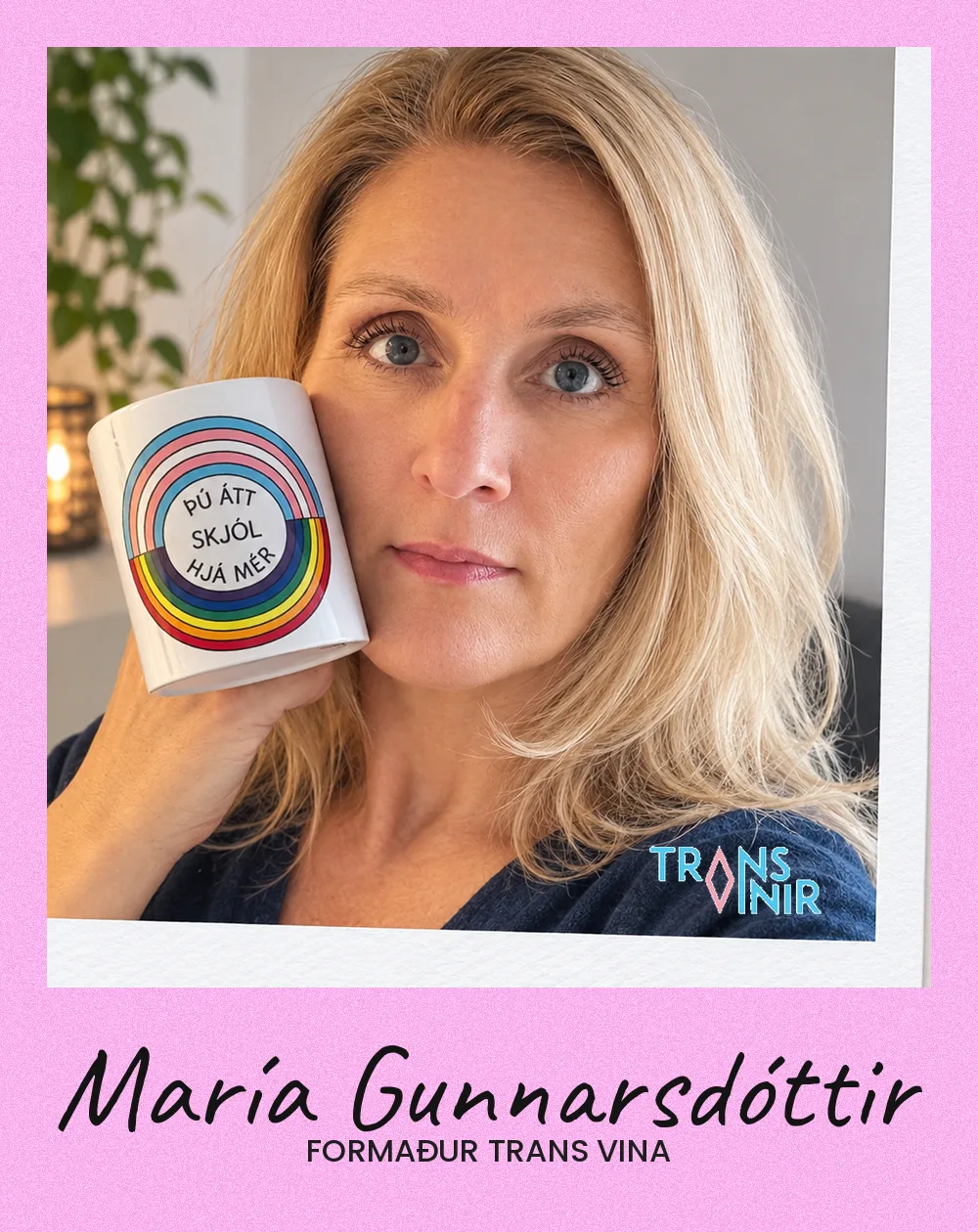
The author is the chair of Trans Allies.